

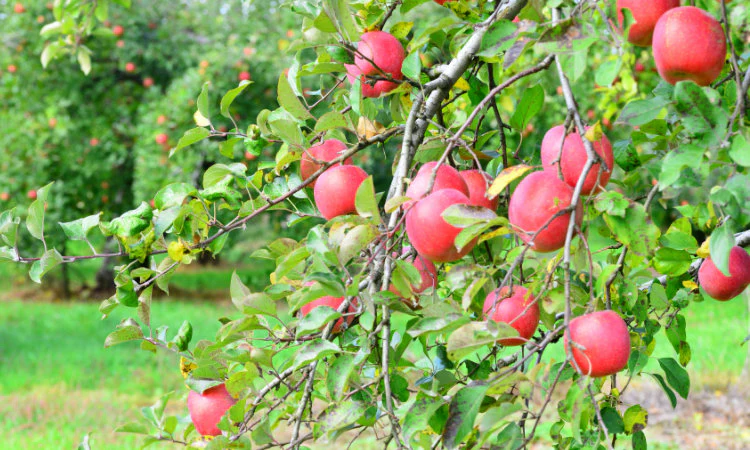
Fruit trees are often judged by the crop they produce, but their value begins long before harvest. A well chosen tree gives a garden shape in winter, blossom in spring, shade and developing fruit in summer, and colour or storage crops in autumn. That seasonal range makes it one of the most useful plants a British gardener can choose.
This broader view matters because many gardens need plants that earn their place more than once a year. A tree that looks good only for a fortnight may not suit a small plot, while a fruit tree can contribute structure, ecology, food, and atmosphere across several months.
When browsing fruit trees for sale, gardeners should think about the whole calendar. The best choice may not be the variety with the most familiar name, but the tree that improves the garden through several distinct phases of the year.
The fruit trees specialists at ChrisBowers advise gardeners to plan fruit trees as seasonal features rather than single-purpose crops. They suggest looking at blossom timing, eventual shape, ripening period, and storage qualities together. A tree that flowers beautifully but ripens when the household is away may be less useful than a quieter variety that fits the garden calendar. For UK gardens, they also recommend considering frost pockets, shelter, and how the tree will look from the house during winter and spring.
Winter Structure Gives the Garden a Framework
The first decision is how bare branches, trained forms, and visual order will serve the garden in ordinary use. This is not a decorative afterthought; it affects where the tree should stand, how visible it will be, and how easy it will be to care for once the first enthusiasm of planting has passed.
A common mistake is to treat gardens feeling empty outside the growing season as something that can be corrected later. Young trees look forgiving, but they soon reveal whether the original choice respected the site. Early judgement therefore matters more than a dramatic intervention after the tree is established.
British gardens can look flat in winter if they rely only on herbaceous planting. That local reality should influence the purchase as much as flavour, blossom, or the photograph attached to a variety description.
The strongest response is to use freestanding or trained trees to create a visible framework all year. This gives the tree a defined purpose from the start and reduces the need for awkward pruning, protection, or compromise in later seasons.
It also helps the gardener make calmer decisions. A tree chosen for a clear role is easier to place, easier to explain within the design, and easier to keep healthy because its needs are understood before it arrives.
For British gardeners who want their gardens to feel purposeful from winter structure to autumn harvest, this kind of planning keeps the planting useful rather than merely hopeful. The result should be a tree that earns its space in the garden every year, not only when the crop is at its best.
Spring Blossom Brings Beauty and Pollination
A good choice becomes much easier once the question of flowering sequence and pollinator value is treated as a practical guide. It gives the gardener something firmer than habit or variety fame to work with, especially where the garden has limits that cannot be changed.
The difficulty with frost damage and poor insect activity is that it often develops quietly. The tree may grow for a while before the weakness becomes obvious, by which time moving it or reshaping it may be difficult.
Spring weather is rarely predictable, so sheltered placement matters. In a British garden, where spring weather, summer dry spells, and winter wet can all arrive in the same year, that caution is rarely wasted.
A better route is to choose varieties and locations that make blossom both beautiful and productive. This keeps the decision connected to real care, real access, and real harvest use rather than an idealised version of the plot.
The same thinking should continue after planting. Watering, mulching, pruning, and observation are much easier when the tree has been selected for the conditions in front of it.
This is where the long-term value of the choice becomes visible. The tree settles more naturally, the gardener spends less time correcting avoidable problems, and the garden gains a feature that feels intentional.
Summer Growth Creates Shade and Anticipation
Developing fruit, leaf canopy, and daily observation deserves attention because it shapes both performance and pleasure. A fruit tree is not only a crop machine; it is a permanent part of the view, the route through the garden, and the rhythm of seasonal work.
If dry spells and overcropping young trees is ignored, the consequences can feel surprisingly ordinary: fruit that is hard to reach, branches in the wrong place, blossom that fails to set, or maintenance that always seems to happen late.
Summer care in UK gardens often means balancing watering with light pruning and fruit thinning. That is why the best purchase is usually the one that fits the setting quietly and consistently.
In practical terms, the gardener should check young trees regularly and avoid letting a small tree carry too much. This does not make the choice less ambitious; it simply grounds the ambition in the conditions the tree will actually meet.
There is also a design advantage. A tree that fits its role can be allowed to mature gracefully instead of being fought back every year through hard pruning or repeated adjustment.
For a garden shaped by fruit trees as four-season garden assets, not just harvest plants, this restraint is not a limitation. It is what allows the planting to feel settled, productive, and pleasant to live with over time.
Autumn Harvest Connects the Garden to the Kitchen
The role of fresh eating, cooking, preserving, and storage is easiest to understand when the garden is imagined several seasons ahead. The young tree may seem small on arrival, but its future canopy, roots, flowers, and fruit will all influence the space around it.
gluts and wasted fruit usually becomes a problem when the purchase is made from a single attractive detail. A variety may sound appealing, yet still be wrong for the position, the soil, or the way the household uses the garden.
Apples, pears, plums, quinces, and crab apples can all serve different kitchen purposes. British gardeners often work with compact plots and variable weather, so a tree must do more than look promising on paper.
The practical answer is to choose harvest windows that fit household routines. This makes the tree easier to manage and gives the garden a more reliable structure as the planting matures.
It is worth thinking about access at the same time. Pruning, feeding, thinning, netting, and harvesting all require room around the tree, and those tasks become harder if the original position was too optimistic.
A tree chosen with this level of care feels less like a gamble. It becomes part of the garden’s routine, noticed in small ways throughout the year and valued for more than a single harvest week.
Late Fruit and Foliage Extend the Display
When the question of autumn colour, persistent fruit, and wildlife is considered early, the whole planting plan becomes more coherent. The gardener can compare varieties by how they will behave, not just by the promise of the fruit.
The risk behind mess on paths and missed harvests is not usually sudden failure. More often it is a slow accumulation of inconvenience: reduced crops, untidy growth, difficult picking, or a tree that never quite belongs where it was planted.
Some trees continue contributing long after the main crop is picked. These everyday pressures matter because a permanent tree needs to work with the garden, not against it.
The sensible course is to place late-fruiting or ornamental trees where their display is useful and manageable. It is a modest decision, but modest decisions are often the ones that determine whether a tree remains easy to keep for many years.
This also supports better seasonal care. A tree selected for the right reason can be pruned lightly, checked regularly, and harvested at the right moment instead of being treated as a problem to manage.
For British gardeners who want their gardens to feel purposeful from winter structure to autumn harvest, that reliability is often more valuable than novelty. A tree that crops well, looks comfortable, and suits the household will usually be appreciated long after a more fashionable choice has lost its shine.
A Seasonal Tree Encourages Better Gardening Habits
The question of regular care through pruning, mulching, thinning, and harvesting brings the discussion back to the way the tree will actually be lived with. Fruit growing succeeds best when the purchase, the position, and the maintenance routine all point in the same direction.
If neglect caused by treating trees as background plants is overlooked, the tree may still survive, but it is less likely to become the easy, rewarding feature the gardener had in mind. The small practical details determine whether care feels natural or burdensome.
Fruit trees reward attention at several points in the British gardening year. This is especially true in UK gardens where weather and space often leave little room for vague planning.
The useful response is to build a simple seasonal routine around each tree. That keeps the tree connected to real conditions and gives the gardener a clear basis for later pruning, feeding, and harvest decisions.
The final test is simple: the tree should make the garden better to use. It should improve the view, offer a worthwhile crop, and fit the amount of care that can realistically be given.
Seen in that light, fruit trees as four-season garden assets, not just harvest plants becomes a matter of good judgement rather than complication. The right tree does not need to be forced into success; it has been chosen so that success is more likely from the beginning.
The seasonal value of a fruit tree is easy to underestimate at purchase time. The harvest is important, but so are the months of structure, blossom, shade, and anticipation that come before it. A tree chosen for the whole year becomes more than a crop; it becomes part of the rhythm of the garden.
Seen in this way, the purchase is not simply a search for a plant label. It is a decision about scale, patience, and the kind of garden the owner wants to live with.
The most dependable choices usually feel measured at first. They take account of the site, the mature tree, the available care, and the way the crop will be used. That may be less exciting than choosing on impulse, but it is far more likely to produce a tree that remains welcome.
A British garden also changes around a tree. Borders fill out, shade shifts, family routines alter, and neighbouring planting matures. The right fruit tree can adapt to those changes because it was selected with enough room, purpose, and resilience from the start.
That is why the best planting decisions are rarely narrow. They consider blossom and pollination, roots and soil, fruit and storage, pruning and access. Each detail is small on its own, but together they decide whether the tree becomes a pleasure or a chore.
For gardeners willing to slow down before buying, the reward is a more settled kind of success. The tree grows into its role, the harvest feels useful, and the garden gains a permanent feature that makes sense in ordinary weather as well as on the best days of spring.
The ordering stage is also a useful point for checking the small details that are easy to overlook. Pollination notes, rootstock information, pruning habit, and expected harvest season can prevent a great deal of uncertainty once the tree is in the ground.
This is particularly relevant for British gardeners who want their gardens to feel purposeful from winter structure to autumn harvest. The best choice should make the intended style of gardening easier, whether the priority is a compact plot, a productive corner, a family space, or a more carefully planned orchard.
Once planted, the first year should be treated as establishment rather than performance. Steady watering, a clear root zone, sensible staking where needed, and restraint with pruning give the tree a better foundation than asking too much from it immediately.
That quieter discipline suits British gardening well. Conditions are variable, and the most successful trees are usually the ones chosen with enough practical imagination to cope with a wet spring, a dry spell, or a harvest that arrives during a busy week.